What Are Natural Stone Blocks? A Complete Guide to Buying, Selling, Pricing, Types, and Exporting Stone Blocks (2026)
An Introduction to Stone Blocks and Their Importance in the Stone Industry
Stone blocks are one of the most fundamental elements in the natural stone and construction industry. In fact, every type of stone used in buildings, construction projects, interior design, and even international exports is initially extracted from quarries in the form of stone blocks.
In recent years, with the growth of the global natural stone market, the importance of purchasing high-quality stone blocks and supplying standard-grade blocks has increased significantly. Countries such as Iran play a major role in supplying this essential raw material due to their rich and diverse stone resources.
Stone blocks are not only the primary raw material for producing slabs and tiles, but also represent an important commercial product in the international export market.
What Is a Stone Block?
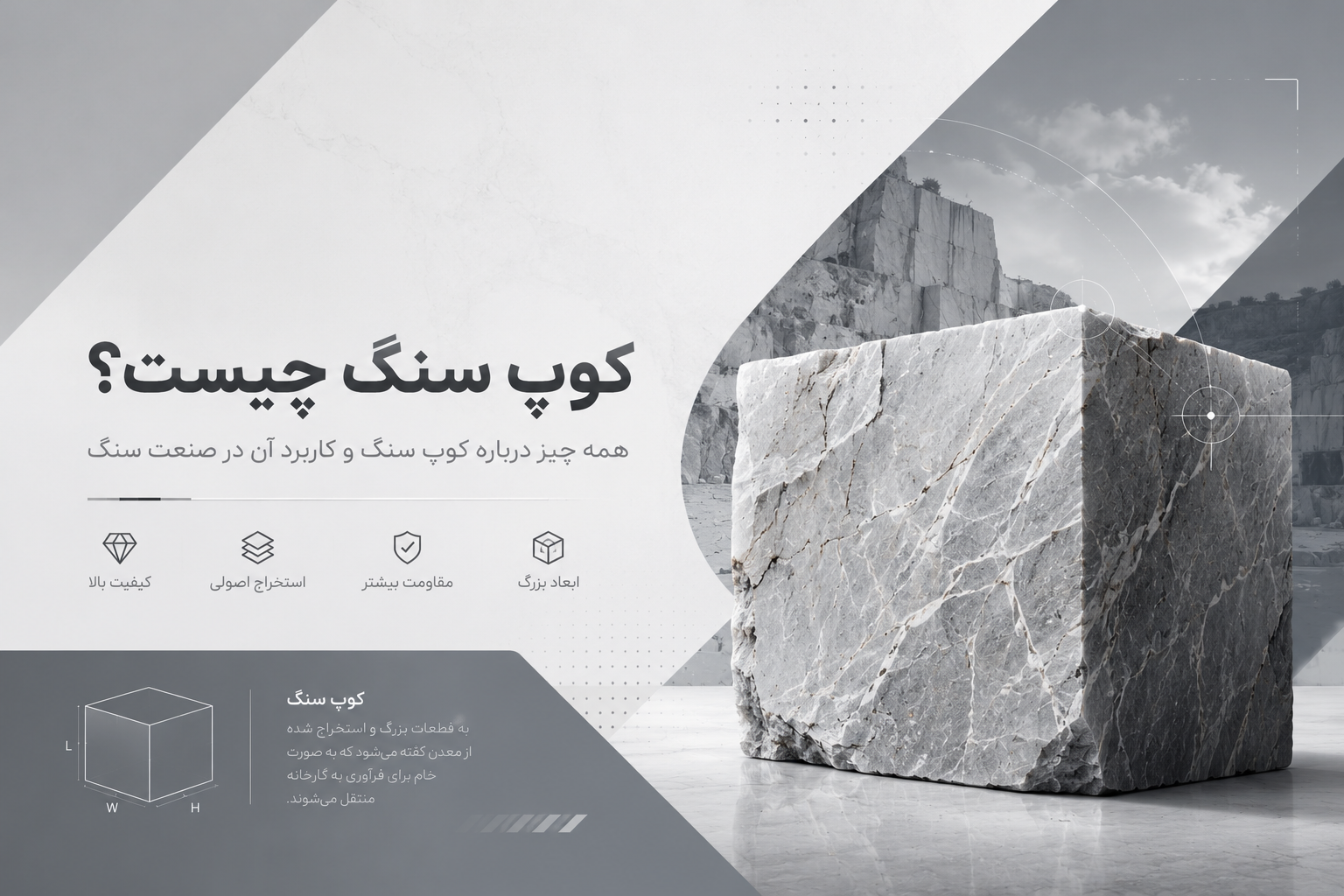
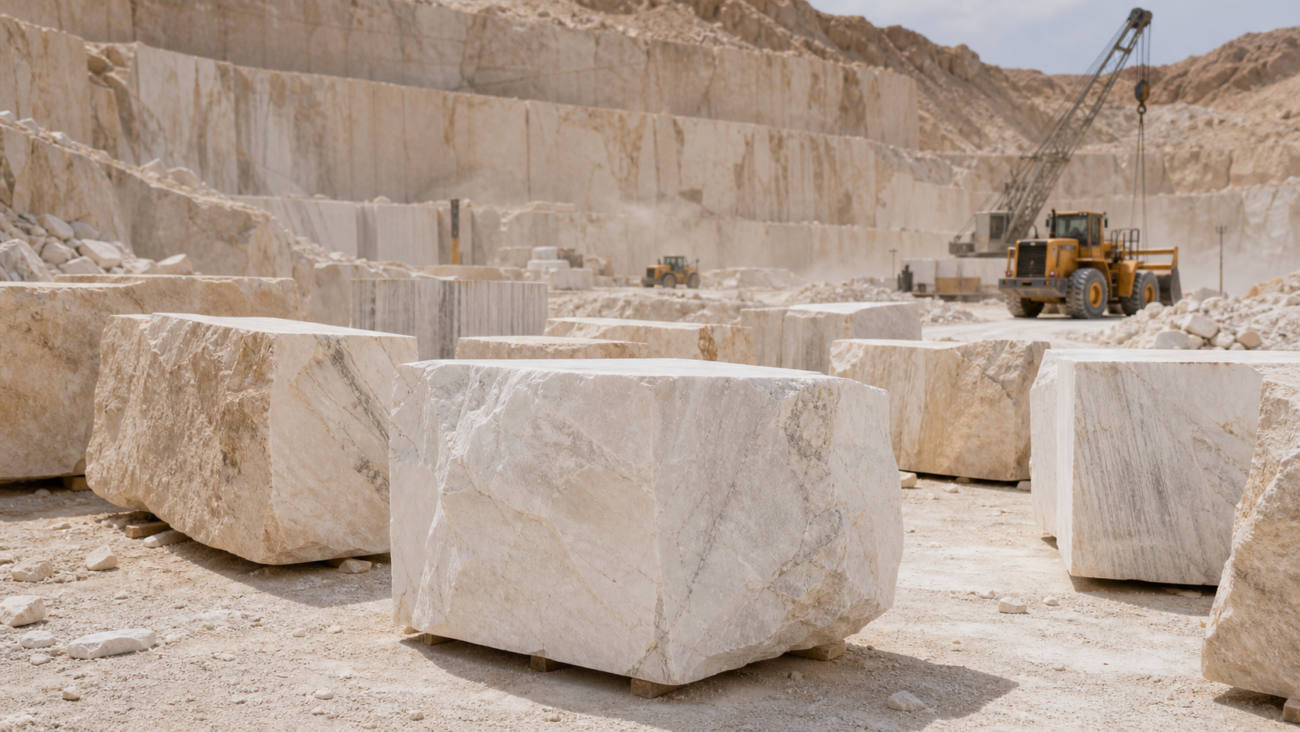
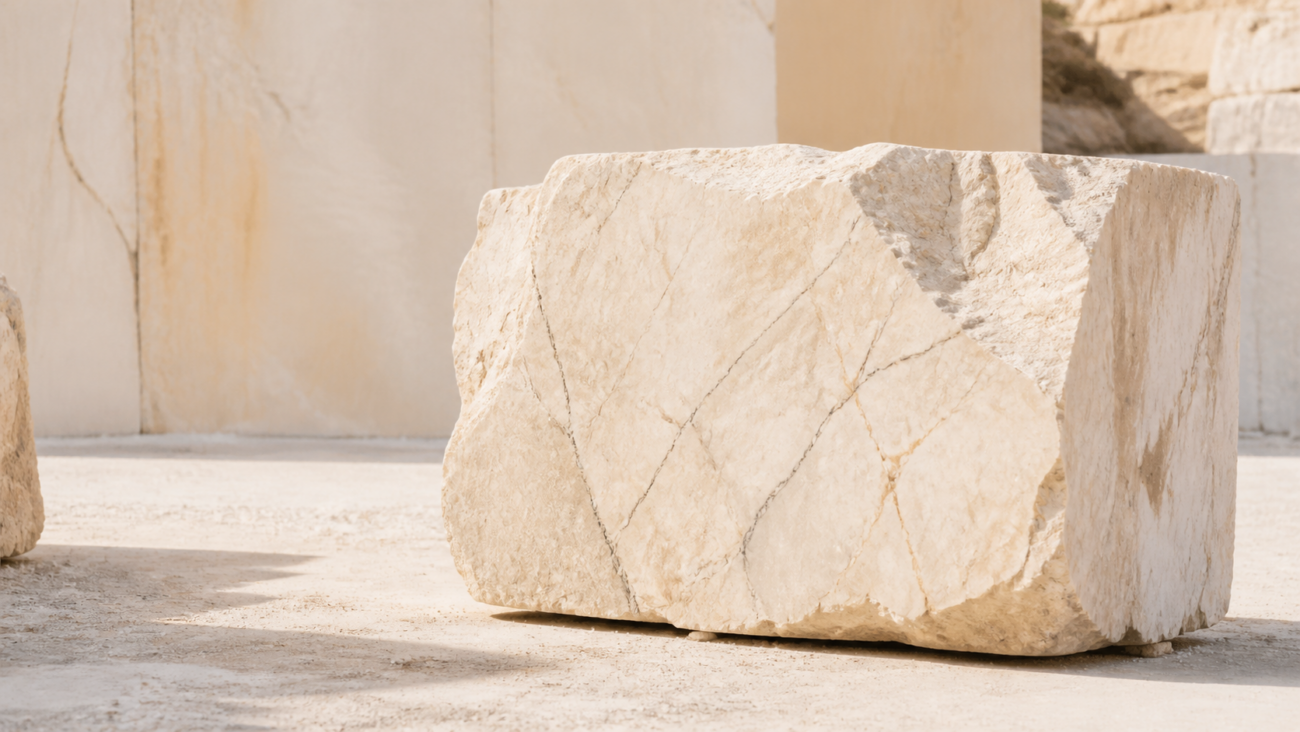
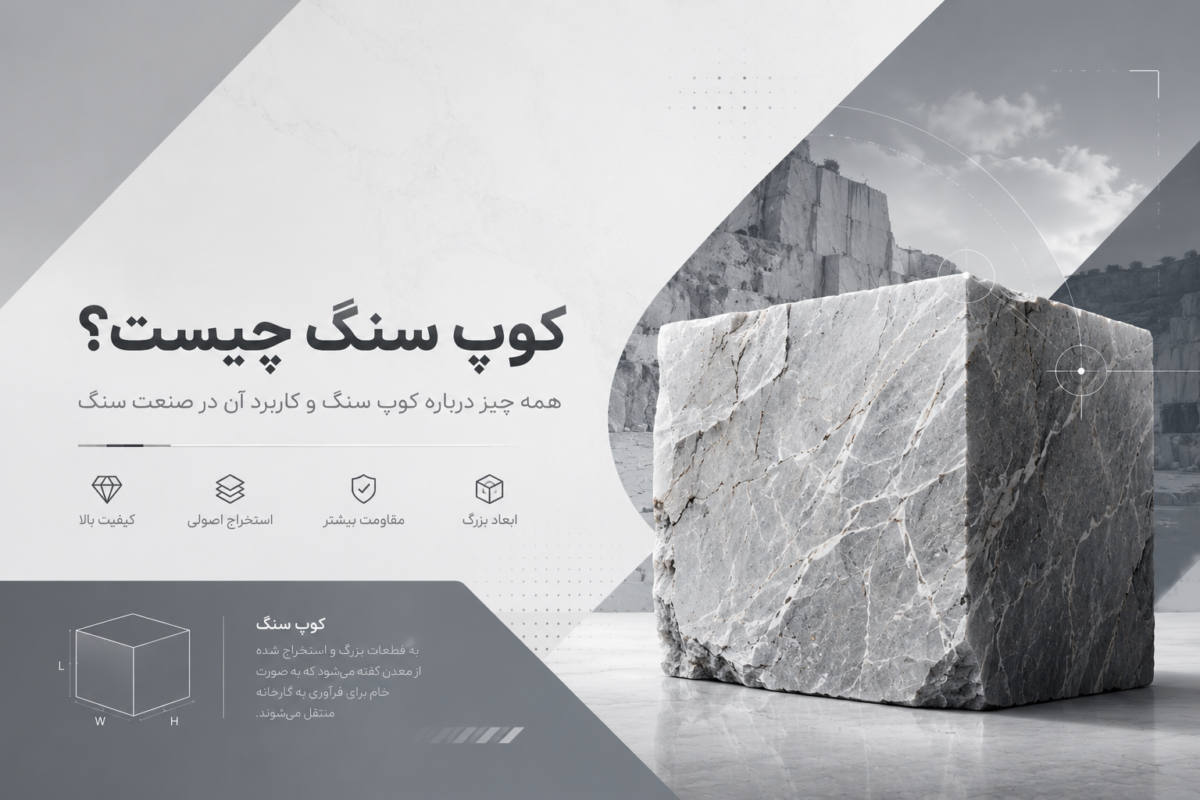
A Stone Block refers to large, raw pieces of natural stone that are directly extracted from quarries and have not undergone any processing or finishing.
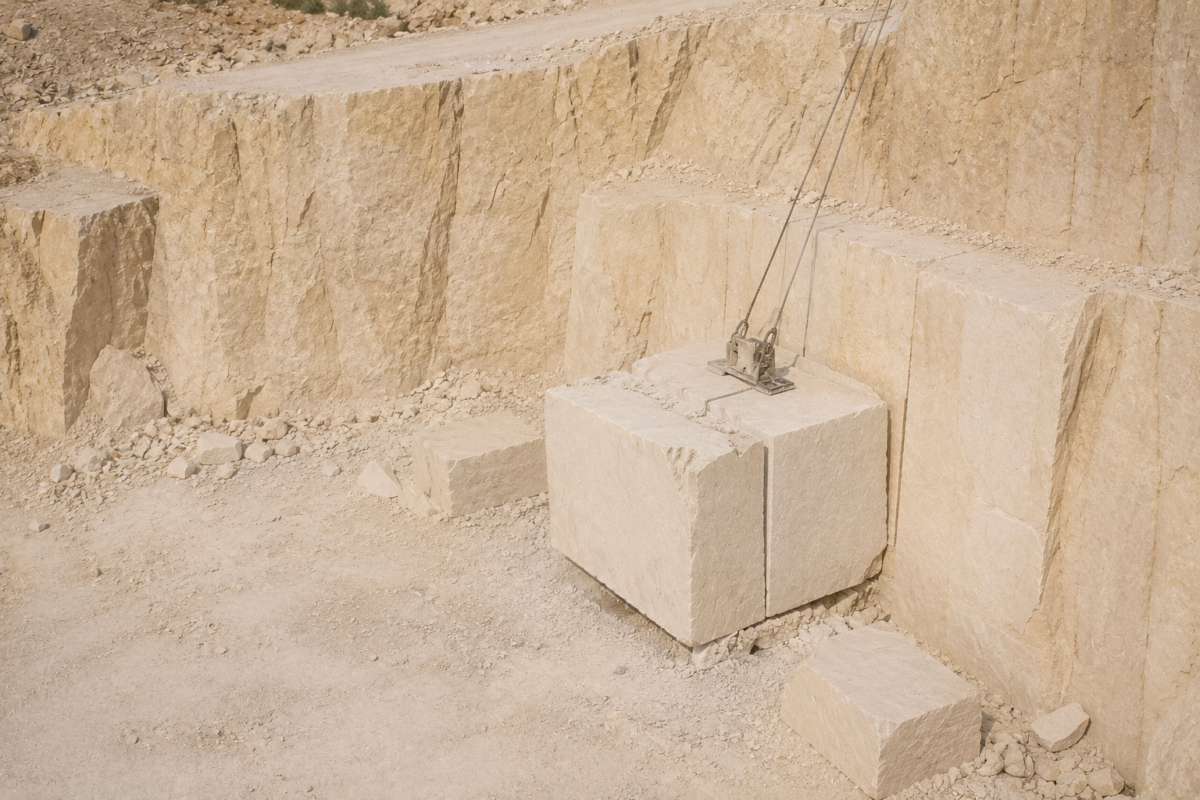
These blocks are typically separated from the quarry using wire saw cutting systems (Wire Saw) or controlled blasting methods, and then transported to stone processing factories for further cutting and production.
Key Characteristics of Stone Blocks
Raw and Unprocessed Material
High Weight (from several tons to dozens of tons)
Irregular or Semi-Regular Dimensions
Suitable for Cutting into Slabs and Tiles
Types of Stone Blocks Available in the Market
Understanding the different types of stone blocks is essential for profitable stone block purchasing. The most important types include:
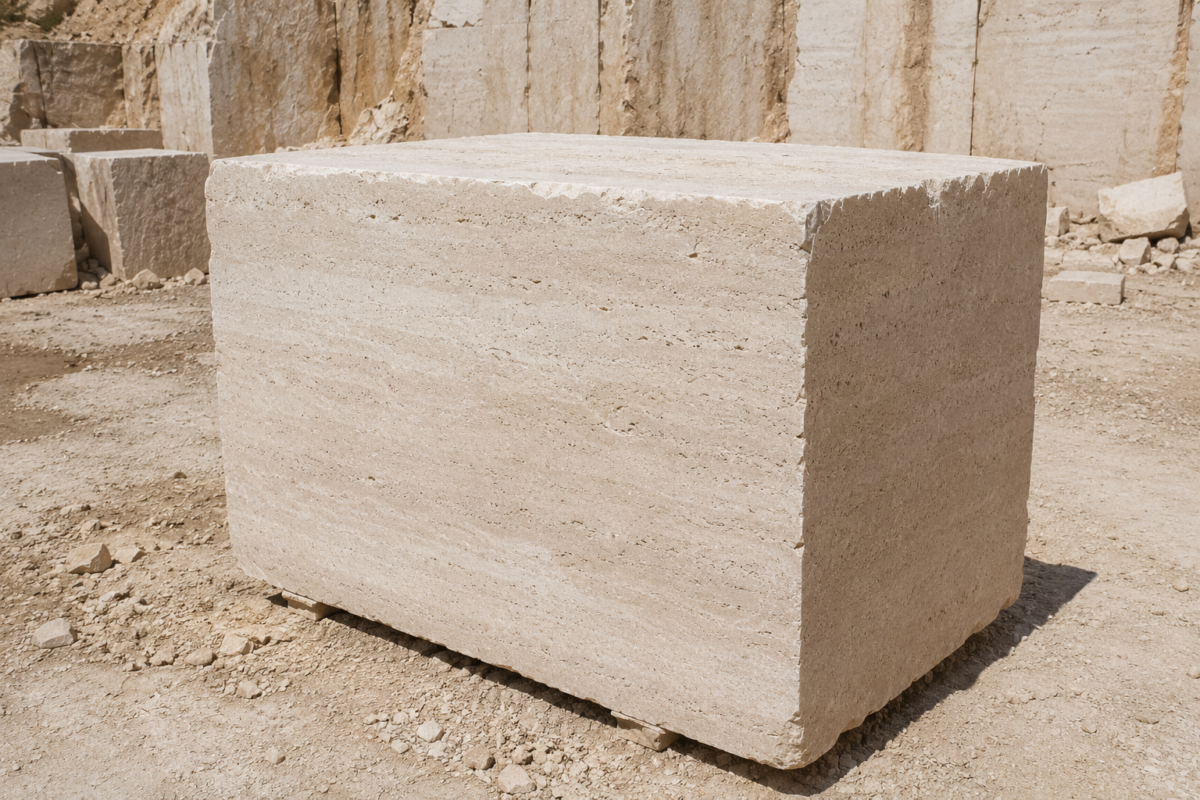
1. Travertine Stone Blocks
Travertine is one of the most widely used building stones. Its blocks are typically extracted in colors such as cream, white, chocolate, and silver.
Features:
Natural Porosity
Suitable for Facades and Flooring
High Demand in Domestic and Export Markets
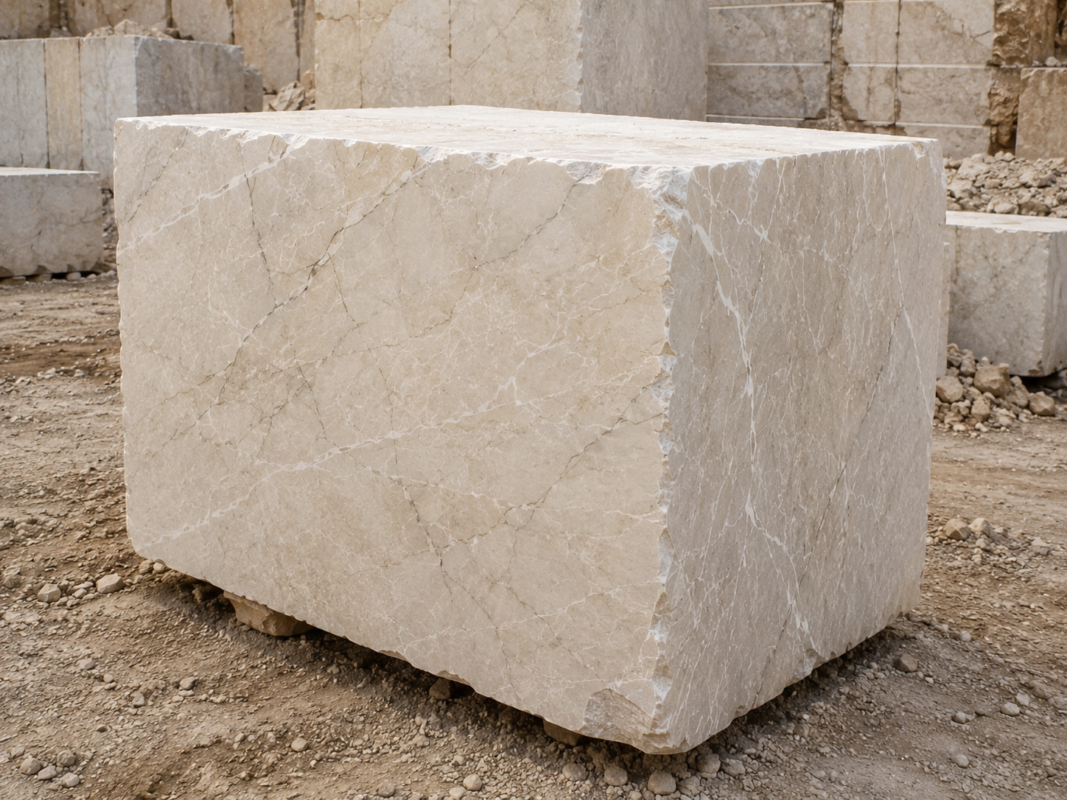
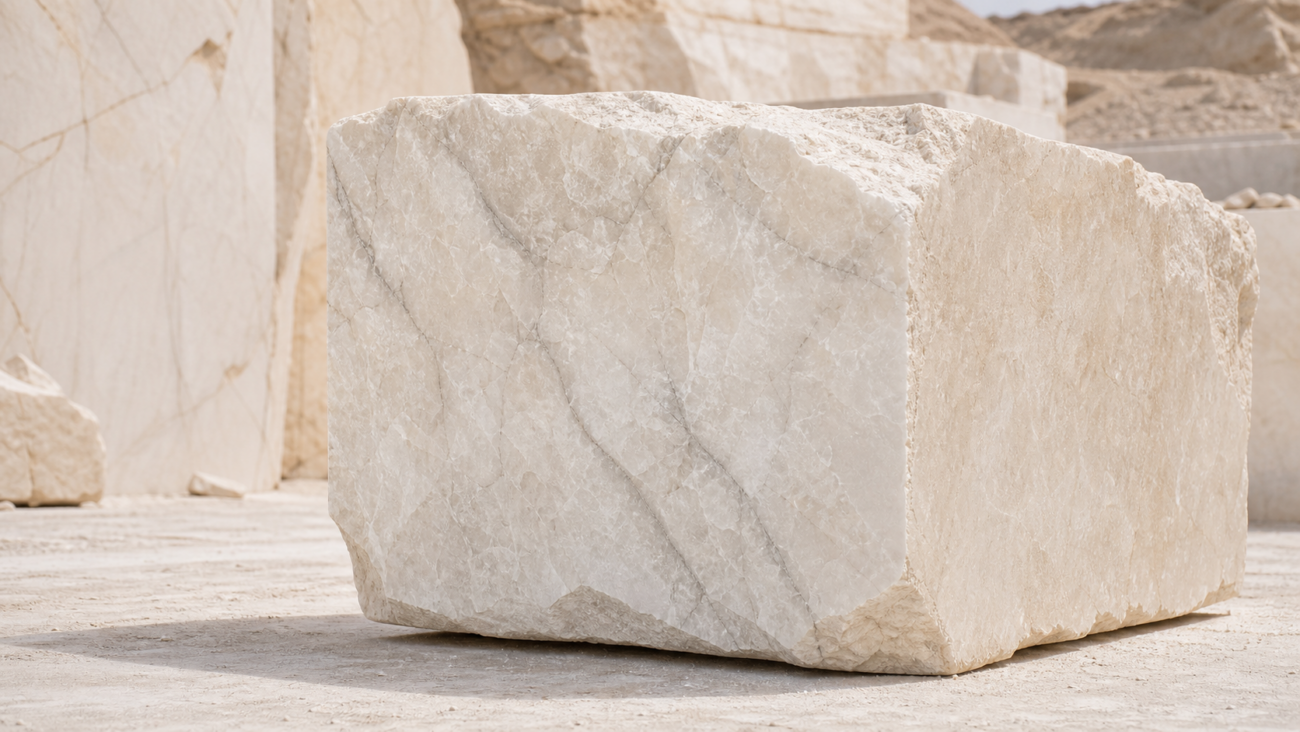
2. Marble Stone Blocks
Marbles are highly popular in the market due to their wide variety of colors and patterns.
Features:
Polished Surface
Medium to High Price Range
Suitable for Interior Design and Decoration
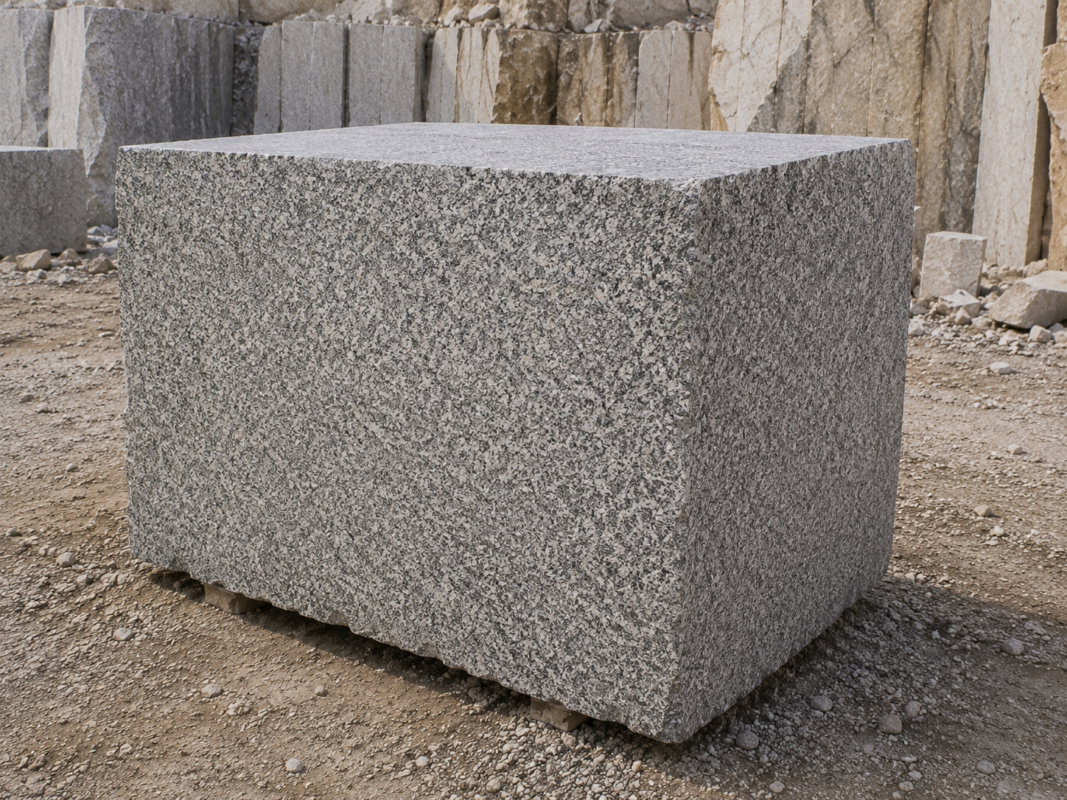
3. Granite Stone Blocks
Granite is one of the hardest and most durable natural stones.
Features:
Extremely High Strength and Durability
Suitable for High-Traffic Areas
High Export Value
4. Onyx Stone Blocks
Onyx is one of the most luxurious natural stones.
Features:
Light Transmission Capability
High Price Range
Suitable for Luxury Projects
5. Chinese (Crystalline) Stone Blocks
This type of stone has a bright background and a crystalline structure.
Features:
Low Water Absorption
Bright and Modern Appearance
Wide Application in Construction Projects
The Stone Block Extraction Process from Quarries
The extraction of stone blocks from quarries is a specialized and multi-stage process:
Step 1: Identifying Extractable Blocks
Geologists examine and evaluate suitable areas of the quarry to identify high-quality stone blocks.
Step 2: Initial Cutting
Using wire saw machines, the stone is separated from the quarry wall.
Step 3: Block Separation
Large stone blocks are detached from the mountain and prepared for transportation.
Step 4: Loading and Transportation
Stone blocks are loaded with cranes and transported using heavy-duty trucks.
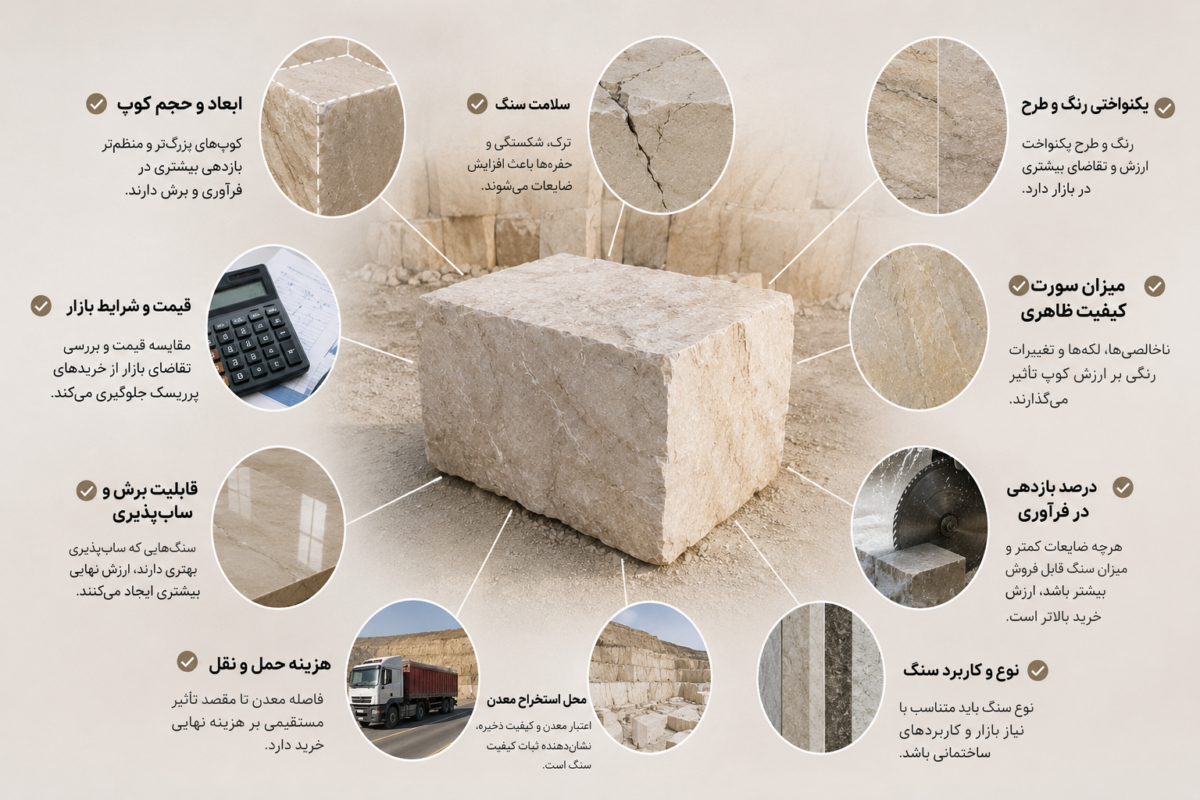
Important Criteria for Purchasing Stone Blocks
If you intend to purchase stone blocks directly from a quarry, you should consider several important factors:
Structural Quality
The presence of internal cracks can significantly reduce the value of a stone block.
Color Uniformity
Stones with a consistent and uniform color have higher market value.
Block Dimensions
Larger blocks result in less waste during processing and provide better profitability.
Waste Rate
Stone blocks with lower waste levels offer higher economic returns.
Quarry Type
The reputation and history of the quarry have a direct impact on the stone block’s price and value.
Stone Block Sales and Market Overview
The stone block sales market includes quarries, stone processing factories, and exporters.
Stone Block Sales Methods
- Direct Sales from the Quarry
- Sales to Stone Processing Factories
- Export to Foreign Countries
- Auction-Based Sales
Advantages of Stone Block Sales
- Fast Liquidity
- Elimination of Processing Costs
- Opportunity for Bulk Sales
- Access to Global Markets
How Is the Price of Stone Blocks Determined?
1. Type of Stone
2. Block Quality
3. Block Size
4. Color and Pattern
5. Market Conditions
Stone Block Export (Global Market 2026)
Stone block export is one of the most profitable sectors of the natural stone industry.
Major Importing Countries:
China
India
Turkey
United Arab Emirates
Italy
Advantages of Stone Block Export
- High Foreign Currency Revenue
- Development of the Quarry Market
- Increased Production
- Attraction of Foreign Investment
Export Challenges
- High Transportation Costs
- Intense Global Competition
- Strict International Standards
Stone blocks, as the primary raw material of the stone industry, play a vital role in the production of various building stones and exports. A thorough understanding of different types of stone blocks, quality assessment, price awareness, and knowledge of the buying and selling market can significantly increase your profitability.
If you are planning to enter the stone block purchasing or selling market, choosing a reliable quarry and carefully evaluating stone quality are the most important factors for achieving success.